
How Artificial Intelligence Finds Problems That Are Difficult to Detect During a Routine Dental Examination
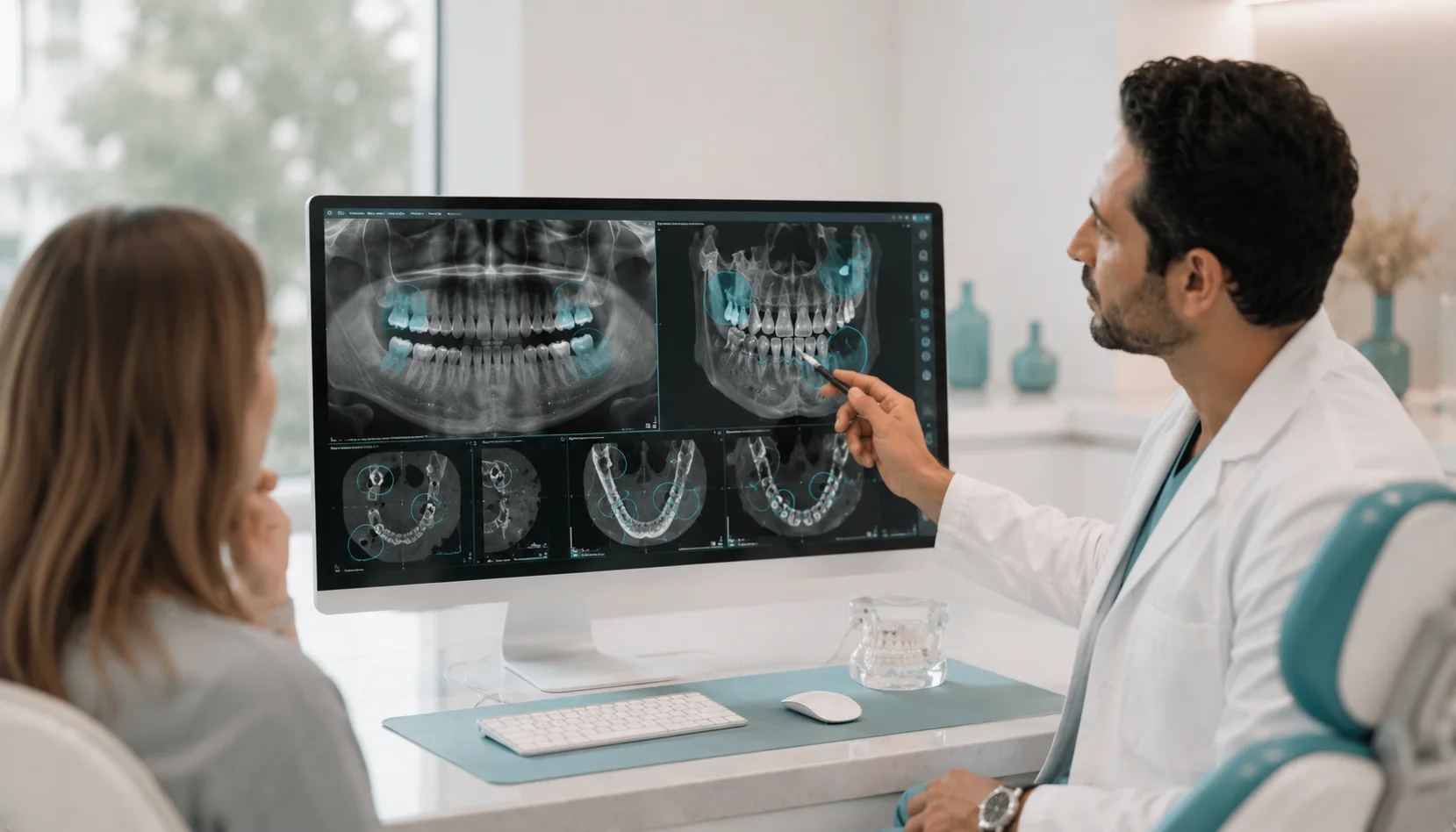
Modern artificial intelligence (AI) systems help dentists analyze X-rays, CBCT scans, and digital dental images with a high level of accuracy. These technologies can identify changes that may be difficult to detect during the early stages of disease. AI does not replace a dentist, but it can help identify potential issues earlier, more consistently, and with an additional level of diagnostic support. In modern dental clinics across Dubai, AI-powered tools are becoming an important part of diagnosis and treatment planning.
What Is Artificial Intelligence in Dentistry?
Artificial intelligence refers to software algorithms trained to analyze large volumes of medical data.
In dentistry, AI can work with:
- digital dental X-rays;
- CBCT scans;
- intraoral scans;
- smile photographs;
- orthodontic planning data.
The primary goal of these systems is to help dentists identify potential problems and evaluate oral health conditions more efficiently.
Why Are Some Problems Difficult to Detect During a Routine Examination?
Even highly experienced dentists must evaluate a large amount of visual information.
Certain changes may be:
- extremely small in size;
- hidden within tissues;
- located between teeth;
- visible only in the earliest stages;
- difficult to assess when reviewing extensive diagnostic data.
This is where AI can provide an additional layer of image analysis and support.
What Types of Problems Can Artificial Intelligence Help Detect?
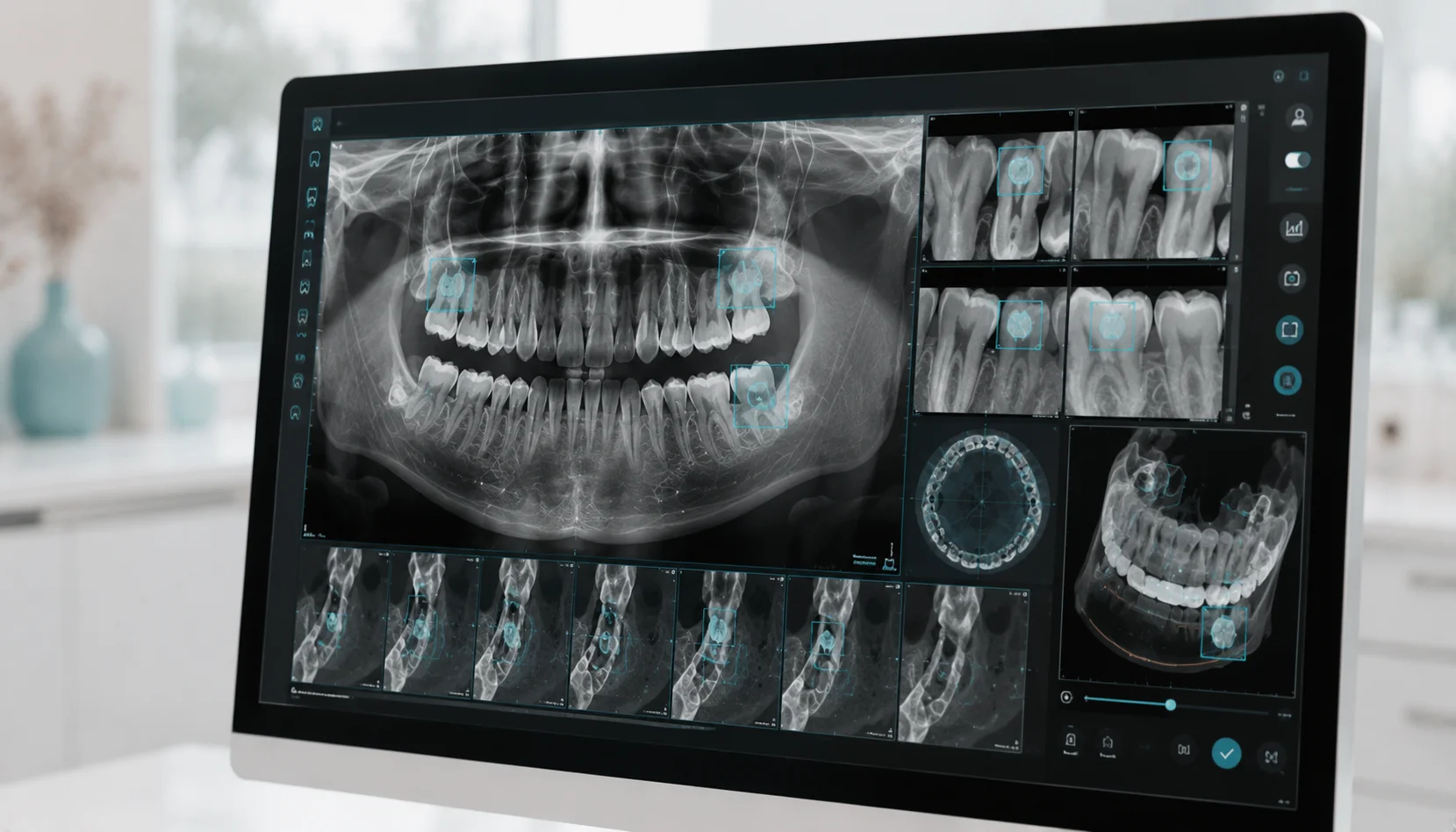
Modern AI systems can assist in identifying various dental conditions.
Common examples include:
- early signs of tooth decay;
- hidden interproximal cavities;
- bone loss;
- signs of gum disease;
- inflammatory changes around tooth roots;
- conditions affecting dental implants;
- tooth positioning concerns before orthodontic treatment.
However, the final diagnosis always remains the responsibility of the dentist.
How Does AI-Based Image Analysis Work?
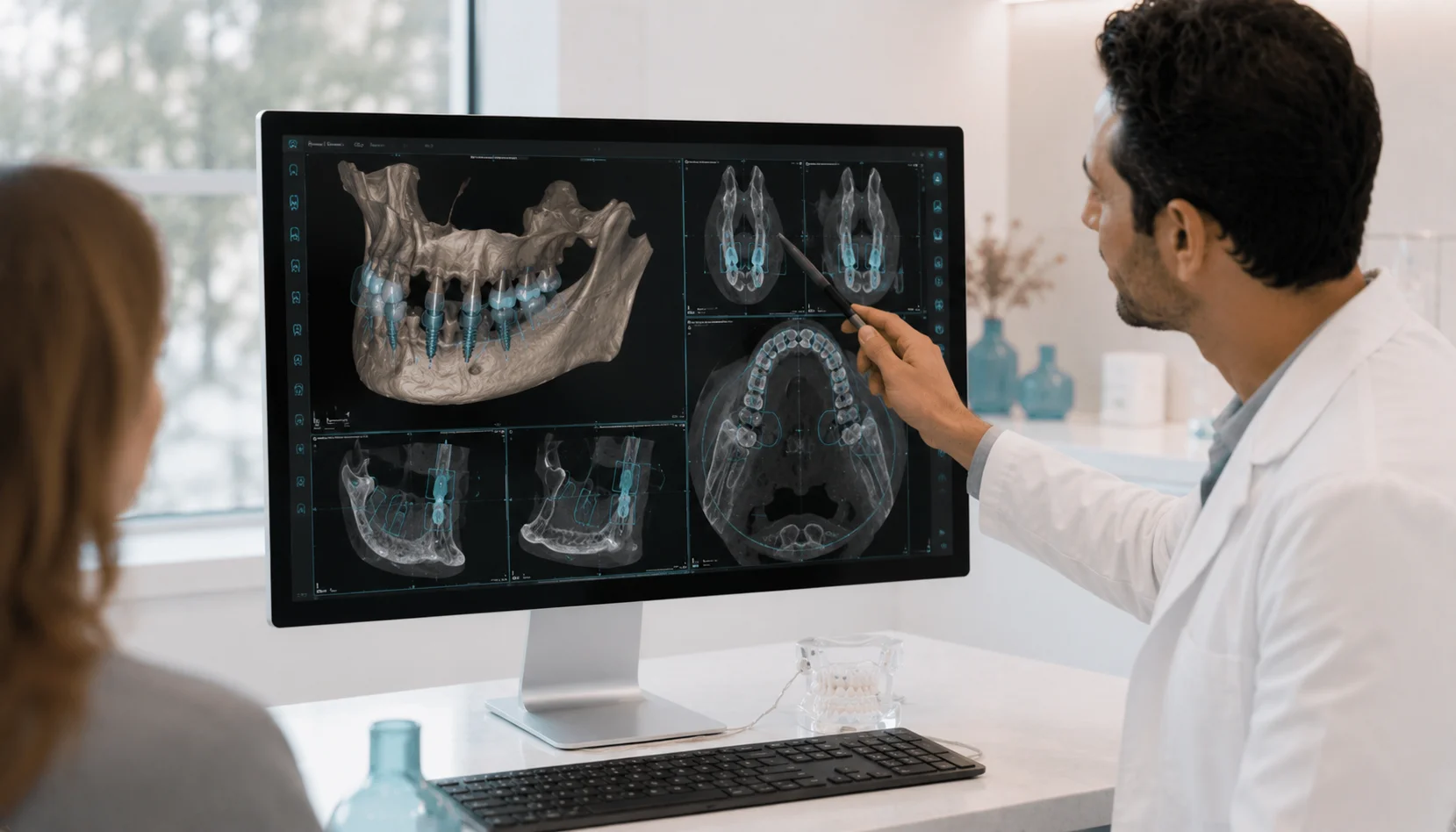
Once an image is uploaded, the system performs an automated evaluation.
The process typically includes:
- Recognition of anatomical structures.
- Detection of potential abnormalities.
- Highlighting areas of concern.
- Providing analytical suggestions for the dentist.
- Comparing findings with trained diagnostic models.
This gives clinicians an additional level of confidence when interpreting diagnostic images.
Benefits of Using Artificial Intelligence
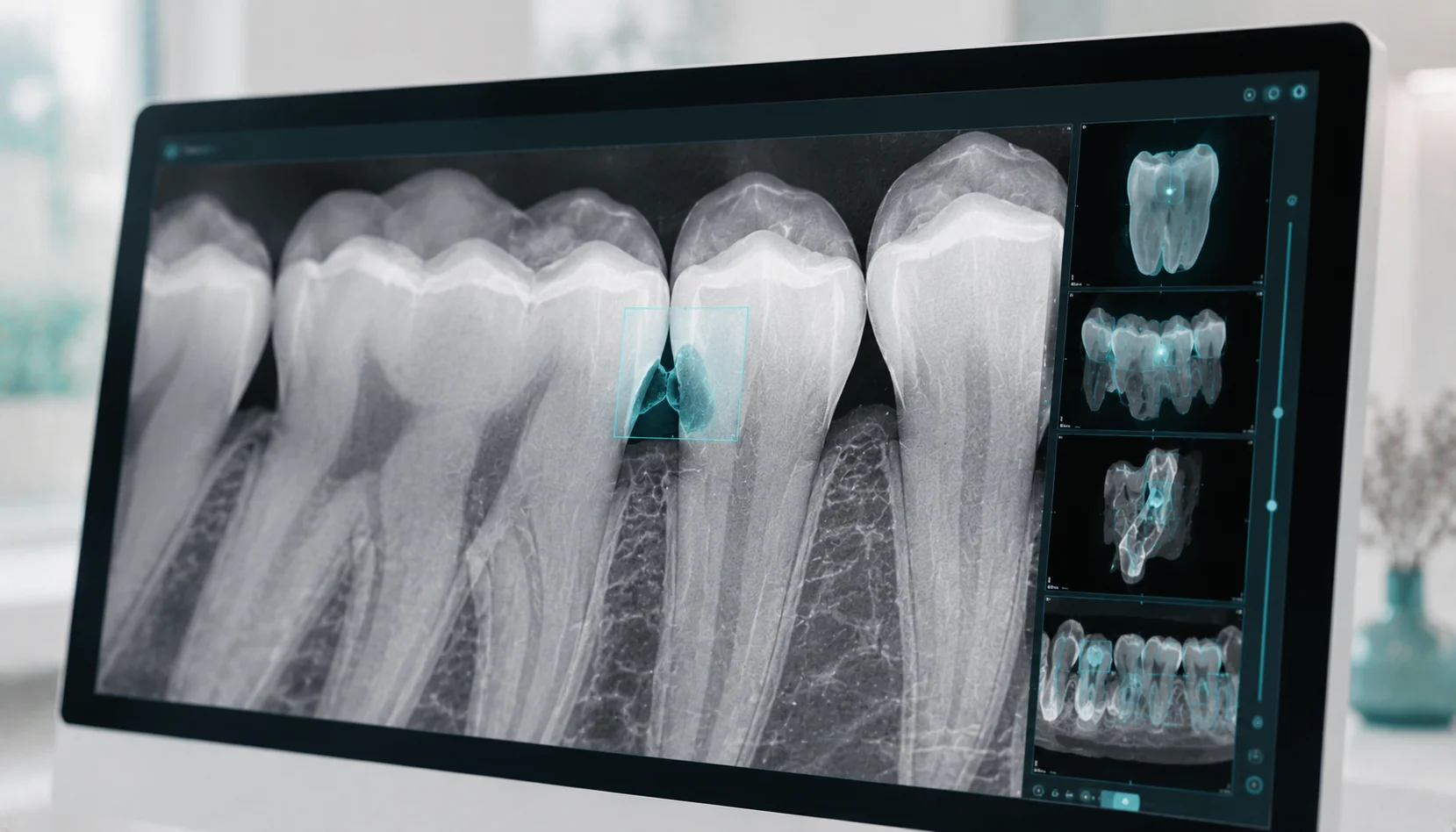
The integration of AI into dental diagnostics offers several important advantages.
Key benefits include:
- more detailed image analysis;
- increased diagnostic consistency;
- support for early disease detection;
- comparison of data over time;
- additional verification of diagnostic findings.
These technologies are particularly valuable when evaluating large datasets such as CBCT scans.
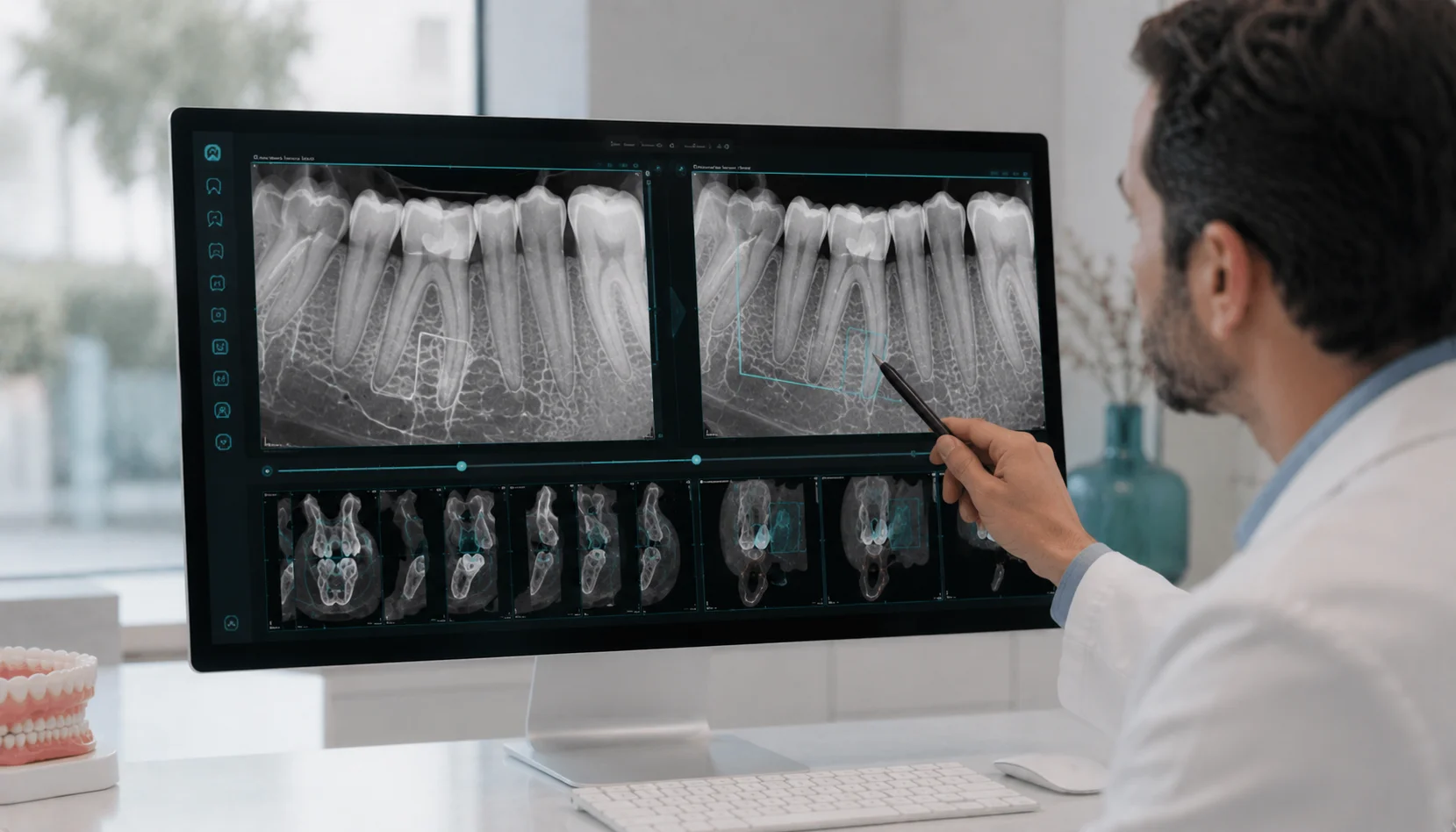
Artificial Intelligence and Implant Planning
Successful implant treatment requires careful assessment of multiple factors.
AI can assist in evaluating:
- bone volume;
- anatomical structures;
- bone density;
- potential limitations for implant placement.
In dental centers throughout Dubai, digital planning based on CBCT data helps make implant treatment safer and more predictable.
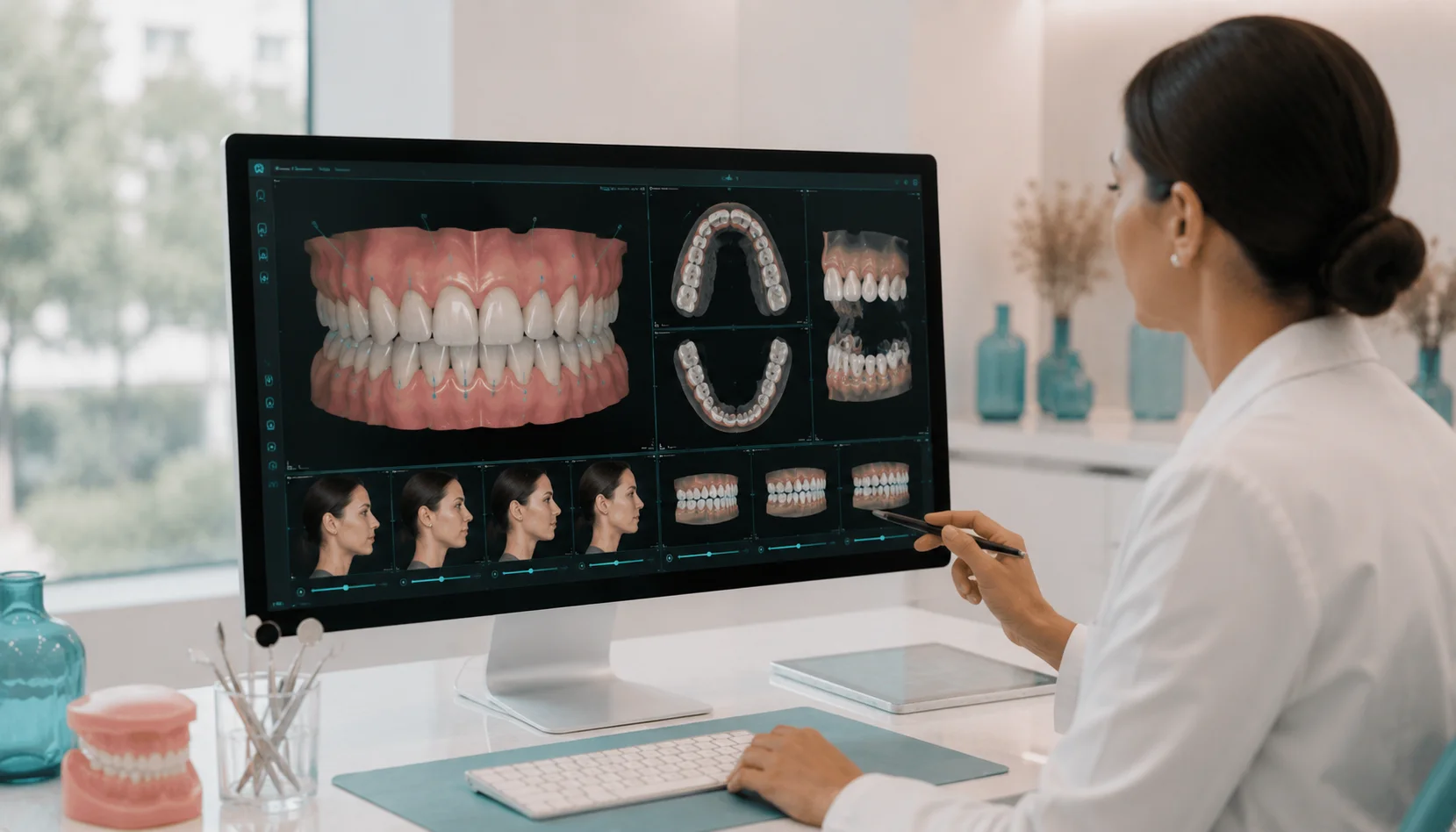
The Role of AI in Orthodontics
Modern orthodontics increasingly relies on digital technologies.
Artificial intelligence can help:
- analyze bite relationships;
- predict tooth movement;
- simulate treatment outcomes;
- assess changes in facial proportions and smile aesthetics;
- improve the accuracy of orthodontic planning.
This is particularly useful for clear aligner treatment and comprehensive bite correction.
Traditional Analysis vs AI-Assisted Analysis
Parameter |
Traditional Analysis |
AI-Assisted Analysis |
| Data processing speed | Depends on data volume | Faster with large datasets |
| Detection of subtle changes | Limited by human perception | Additional analytical support |
| Comparison of images over time | Manual process | Partially automated |
| Treatment planning | Performed by dentist | Supported by digital tools |
| Final decision-making | Dentist | Dentist |
Can Artificial Intelligence Replace a Dentist?
No.
AI is a support tool and does not make clinical decisions independently.
Only a qualified dentist can:
- evaluate symptoms and concerns;
- perform a clinical examination;
- interpret diagnostic findings in context;
- establish a diagnosis;
- develop an individualized treatment plan.
The most effective approach combines professional clinical expertise with advanced digital technology.
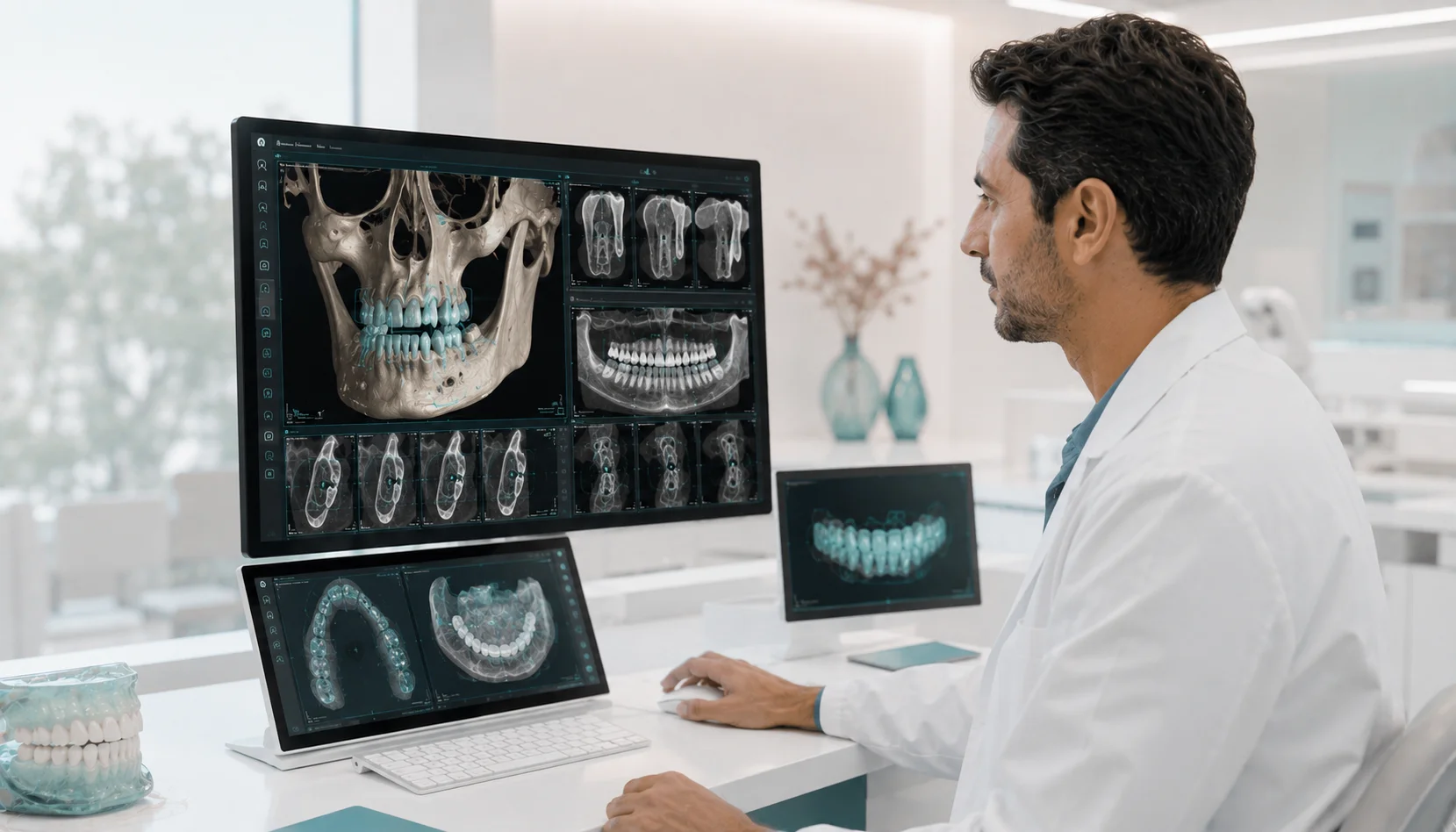
Artificial intelligence is becoming an increasingly valuable part of modern dentistry, helping clinicians analyze complex diagnostic data and identify changes that may be more difficult to detect through traditional evaluation alone. However, the responsibility for diagnosis and treatment decisions always remains with the dentist.
If you would like to experience modern dental diagnostics in Dubai, contact Factor Smile. Our specialists use advanced imaging technologies, digital treatment planning, and intelligent analytical tools to provide highly accurate diagnostics and a personalized approach to dental care.
Frequently Asked Questions