
What's better: an irrigator, floss, or a single-tuft brush?
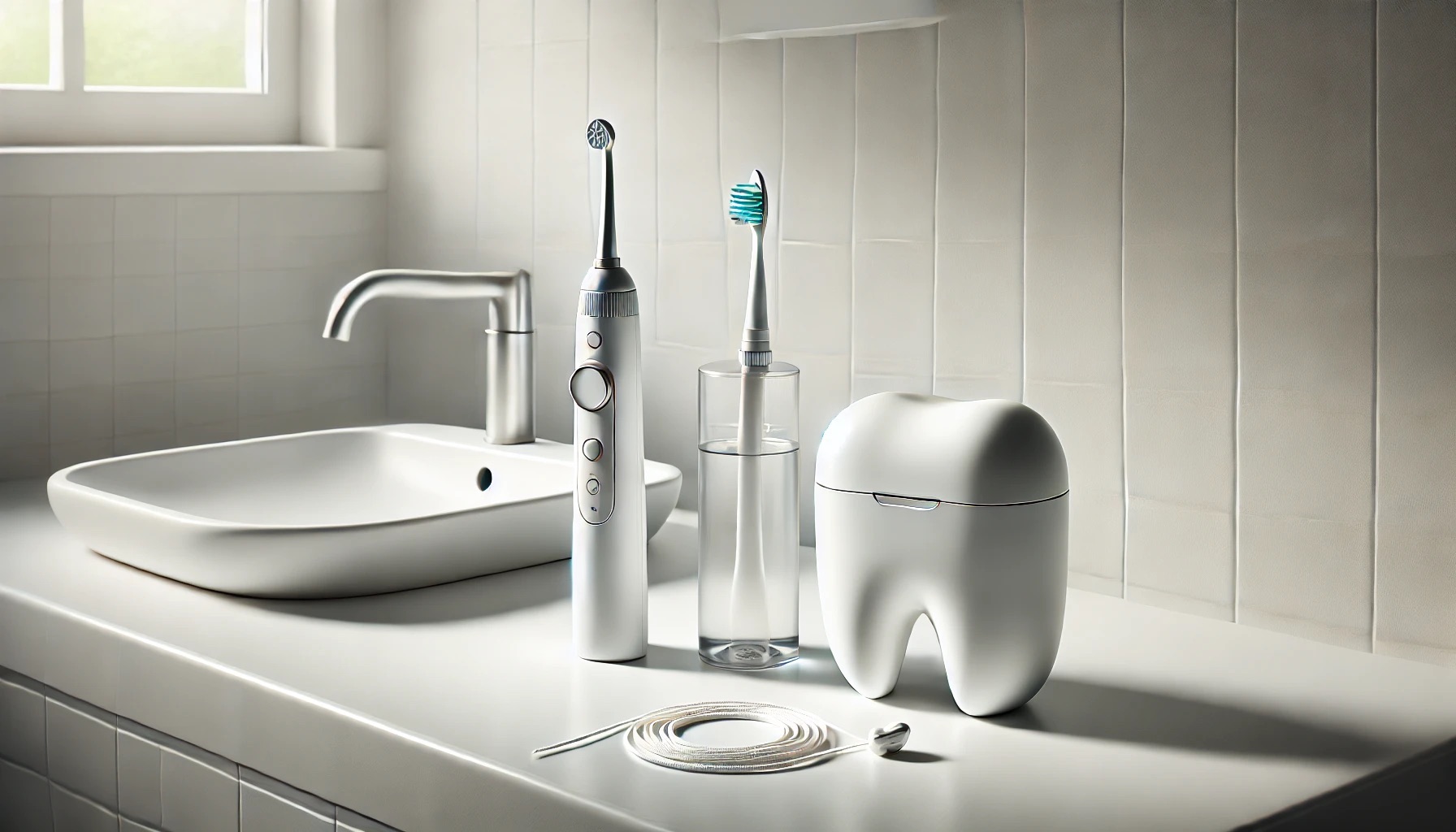
Proper oral hygiene is not limited to brushing with a regular toothbrush. Interdental spaces, the gum line, and the areas around implants and braces require precise and gentle cleaning. For this, three key tools are used: an irrigator, dental floss, and a single-tuft toothbrush. Each performs its own function, but together they provide the cleanest and healthiest result.
What exactly do these tools clean?
Types of irrigators
- Stationary — powerful devices suitable for home use.
- Portable — compact and convenient for travel.
- With nozzles for implants, braces, and periodontal pockets — more precise.
When patients ask which irrigator is best to buy for home use, dentists usually recommend models with adjustable pressure and multiple nozzles.
The irrigator is one of the most effective tools for deep hygiene, especially if you are choosing which irrigator to buy for home use or wondering whether you need one at all. Its directed water jet gently cleans under the gum line, interdental spaces, and around braces, implants, and crowns — places a regular brush simply cannot reach. The water flow removes soft plaque and food particles and also massages the gums, making hygiene more effective and gentle. That is why many patients ask not just whether an irrigator is necessary, but how to use an irrigator correctly to get maximum benefit.
Types of dental floss
- Waxed — glides more easily, ideal for beginners.
- Unwaxed — grips plaque better.
- Teflon — very smooth and tear-resistant.
- Floss on a holder — convenient for those who struggle with traditional floss.
- Superfloss — for implants, wide gaps, and bridges.
Dental floss remains an irreplaceable tool for daily cleaning of interdental spaces. Properly selected floss — classic, Teflon, or floss on a stick — helps remove plaque at contact points, clean soft deposits between teeth, and eliminate food debris even in narrow spaces. It is the only tool that physically scrapes plaque from the sides of teeth, which is why knowing how to use dental floss and how to floss correctly is essential. When choosing the best types of floss, focus on glide, strength, and comfort — it makes daily hygiene easier and more effective.
Types of single-tuft toothbrushes
- Classic single-tuft — a small tuft for targeted cleaning.
- Medium-stiffness tuft brush — a universal option for daily care.
- Special brushes for implants and braces — with softer bristles.
A single-tuft toothbrush is a precision tool ideal for areas where a regular toothbrush cannot reach. It thoroughly cleans the gum line, around brackets, around implants, and the back teeth — without damaging enamel or injuring the gums. Many patients choose a single-tuft brush for implants or a medium-stiffness brush for everyday use when precise plaque removal is important. Knowing how to use a single-tuft toothbrush correctly helps maintain ideal hygiene in hard-to-reach areas and significantly reduces inflammation risk.
How to choose: irrigator, floss, or single-tuft brush?
How to choose an irrigator
If you are choosing an irrigator for the first time, it is important not only to focus on the brand, but also to understand which characteristics truly affect cleaning quality. An irrigator should be selected individually — some may need a stronger water jet, while others need a gentler mode for sensitive gums.
Focus on:
- pressure range (the wider, the better);
- number of nozzles;
- reservoir type (stationary models are more convenient);
- jet power and modes.
If several family members will use it, choose a model with multiple color-coded nozzles.
How to choose dental floss
For those just beginning to learn interdental hygiene, it is important to understand the different types of floss and their differences. The tool may seem simple, but choosing the right floss determines how well plaque is removed from the side surfaces of teeth and how effectively cavities are prevented.
Choice depends on:
- interdental space width;
- gum sensitivity;
- presence of inflammation;
- your experience level.
Beginners should choose Teflon or waxed floss — it glides smoothly and is easy to use.
How to choose a single-tuft brush
If you have never used one, it’s important to understand why a single-tuft toothbrush is needed and how different models vary. This tool is essential if you have orthodontic appliances, implants, or difficult-to-clean areas.
Consider:
- bristle stiffness (medium is best);
- tuft size;
- handle comfort;
- bristle density.
Soft bristles are best for implants and sensitive gums; medium stiffness is ideal for gum-line cleaning.
Comparison: which tool is better and when?
Each tool works best in its own zone. Below is a detailed comparison integrated into the article:
Comparison table: irrigator, floss, single-tuft brush
| Task | Floss | Single-tuft brush | Irrigator |
|---|---|---|---|
| Interdental spaces | Most accurate cleaning of contact surfaces; removes dense plaque | Partially effective, not suitable for very narrow spaces | Washes out food well, but removes only soft plaque |
| Gum line | Moderate effectiveness | Excellent cleaning at the tooth–gum border | Massages gums, reduces inflammation |
| Braces / orthodontics | Difficult to use between wires and brackets | Ideal for brackets, wires, and hard-to-reach areas | Easily washes under the wire and around orthodontic elements |
| Implants / crowns | Often inconvenient, requires skill | Precision cleaning around the abutment | Washes deep pockets, reduces inflammation risk |
| Sensitive gums | May irritate if used incorrectly | Gentle and soft cleaning | Most comfortable thanks to adjustable pressure |
| Food debris removal | Partial | Suitable only for small deposits | Removes both large and small debris completely |
How to use each tool correctly
How to use an irrigator
- Tilt your head forward.
- Direct the water jet at a 45° angle toward the gum.
- Start with minimal pressure.
- Move slowly along the gum line and between teeth.
This is the most gentle care method for sensitive gums and braces.
How to use dental floss correctly
- Take 30–40 cm of floss.
- Stretch it between your fingers.
- Insert it gently between teeth.
- Wrap around the tooth in a “C” shape.
- Remove plaque using up-and-down motions.
Floss is the only tool that completely removes plaque between teeth.
How to use a single-tuft brush
- Place the tuft along the gum line.
- Use small vibrating motions.
- Clean each tooth for 5–10 seconds.
The brush is perfect for precise cleaning in difficult areas.
Conclusion: the best result comes from combining all three tools
Many patients ask whether a universal tool exists for perfect oral hygiene — but in reality, no single tool can fully replace another. Even the best single-tuft brushes cannot replace floss, and an irrigator cannot remove dense plaque. Dentists recommend combining all three methods — this is the most reliable way to protect enamel and gums from inflammation and maintain fresh breath throughout the day.
The ideal daily routine:
- Floss — for interdental spaces.
- Single-tuft brush — for the gum line and narrow zones.
- Irrigator — for deep, gentle rinsing.
This approach protects enamel, reduces gum inflammation, removes plaque, and keeps your mouth as clean as after a professional hygiene session.